This week's best things #83
A call for participants for a digital decision-making pilot, plus pieces on BoM’s troubled rebuild, leadership habits, 2026 trends, digital luxury, Theory X and Y, platform safety, judicial overreach, AI notetaker risks, and some thoughts on imagination and resilience.

We're in Stockholm at the moment, half holiday / half embassy visit, so this is a shorter edition.
Here are some good things.
Digital decision-making in cultural organisations: a collaborative research pilot
I’m running a small research pilot (next Spring) looking at how digital decisions actually get made inside cultural organisations.
If you’d like to spend a few weeks noticing and discussing your own patterns alongside a small peer group, I’m looking for a handful of organisations to take part. The deadline for expressions of interest is 23rd January.
I’ve seen in my mentoring and 'critical friend' engagements this year that organisations often benefit simply from noticing how their decisions actually get made. Patterns become visible surprisingly quickly once you start paying attention, and then you can actually do something about them.
More info and guidance on how to apply here.
 Ash Mann
Australia's Bureau of Meteorology's new website
In case you haven't been following the unfolding fiasco in Australia, here's an update.
It's an interesting example of an organisation seemingly not understanding which users are getting the most value from a service (in this case, Australian farmers, emergency services, and people living in rural communities), and then not factoring those needs into the rebuild.
"The updated rain radar functionality has come in for particular criticism. On the previous website, users could see the path a storm or weather front had taken and see the time it was likely to arrive. This function was especially useful for emergency services. But this was removed. Other users have noted a lag time for the new radar – a storm could arrive before the bureau website suggested it would."
Oh, also it cost $96,500,000. Which is a lot.
 Daisy Dumas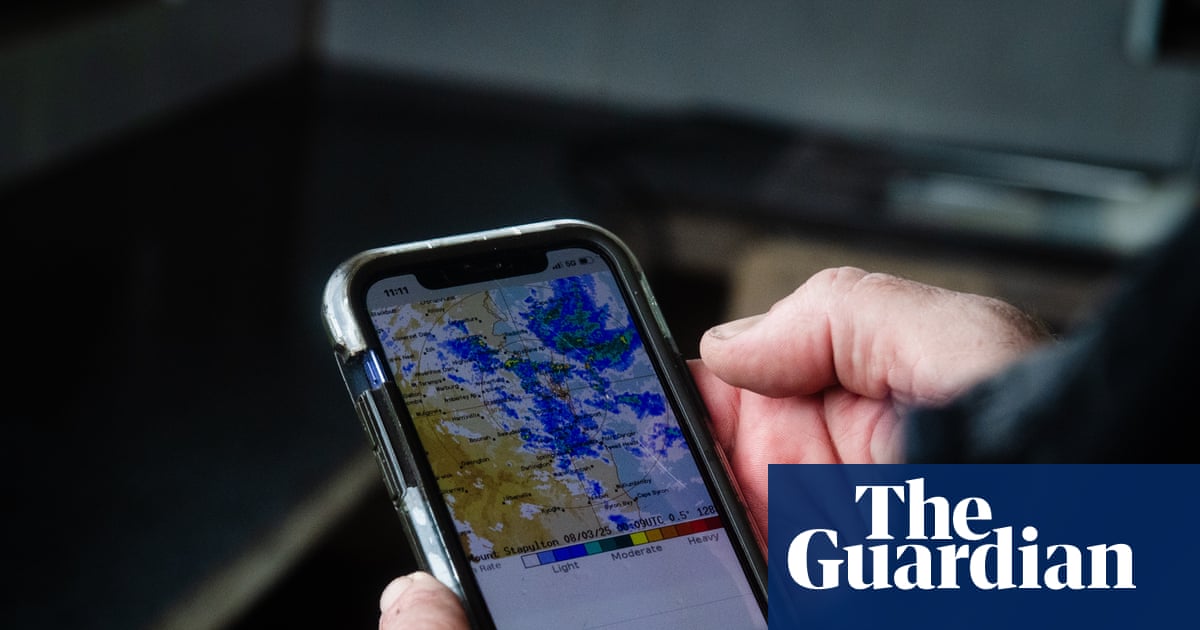
 Steve Turton
100+ trend reports for 2026
Amy Daroukakis and co have done their annual round-up of all the trend reports they could find for next year, and have helpfully, and generously, put them all in one place.

Six ways you are over-using your strengths and keeping people in endless frustrating meetings
Last week's newsletter from Dr Carrie Goucher detailed a bunch of (very recognisable) leadership behaviours that harm organisational culture.
Things like:
- You're not being transparent about decision-making and ownership
- You're going to all the meetings
- You're not doing the prep (or engaging with the meeting design) because seniority gives you permission to skip it
- You're allowing too many priorities
Well worth a read.
Porsche Looks Good. Monzo Feels Better: Rethinking Digital Luxury
A few interesting thoughts/observations on the fact that so many digital experiences from premium brands are...quite rubbish, and what they might do to change that.
I saw a good comment from John Gibbard on this "complexity tends to be mistaken for exclusivity, and suddenly you’ve got bloat, tangled IA and bolted-on features that no amount of storytelling can rescue".
 Advertising Week
Theory X and Theory Y
I've been reading a bit about motivation theory this week, including a deeper look into Douglas McGregor's "Theory X and Theory Y".
McGregor drew on Maslow's work (of the 'hierarchy of needs' fame) and 'theory X and theory Y' outlines two contrasting theories of human motivation and management at work.
Theory X assumes that individuals need close supervision, tight structures, and firm direction because they are likely to avoid responsibility. Whereas Theory Y assumes that people are capable, self-motivated, and able to take ownership when given the right conditions - with a focus on fulfillment, creativity and agency.
It feels like many (most?) cultural organisations have Theory Y people trapped within Theory X systems and structures.
 Contributors to Wikimedia projects
 Jeremy Sutton, Ph.D.
A chat with Tim Woodall (Faber & Faber)
Earlier this year I had a podcast chat with Tim Woodall, who used to be the Director of Marketing at The Philharmonia and is now Head of Director to Consumer Marketing at Faber & Faber.
We talked about the comparison between the arts and publishing, launching a new subscription product, audiences, insights, brand, and lots more good stuff.


He Hunted Alleged Groomers on Roblox. Then the Company Banned Him
Everything I read about the gaming platform, Roblox is...alarming. The company is facing multiple lawsuits around child safety.
This article in Wired doesn't exactly allay those concerns.
"Roblox’s cease-and-desist against Schlep comes amid mounting pressure against the company. Over the past four months, several states have launched high-profile legal actions alleging that the gaming platform has become a hunting ground for pedophiles preying on its youngest and most vulnerable users.
In August, Louisiana's attorney general filed a lawsuit alleging Roblox “knowingly enabled and facilitated the systemic sexual exploitation and abuse of children.” In October, Florida attorney general James Uthmeier issued criminal subpoenas to the company to assess whether it is “aiding predators in accessing and harming children.” And earlier this month, Texas attorney general Ken Paxton sued Roblox, alleging it is “putting pixel pedophiles and profits over the safety of Texas children.”"
 David Gilbert
Football, Power, and Censorship: How La Liga Broke the Spanish Internet
Spotted via Numiko's Dave Eccles, if you want to see a good illustration of why monopolies are bad, as are lawmakers who don't understand technology.
"Before a football match, La Liga will identify a list of sites that they believe are streaming illegaly and write down the IP addresses of the servers of those sites.
The problem is… those sites use services like Cloudflare, Vercel, Netlify content delivery networks (CDN’s) to serve their content. These CDN’s protect your site from being attacked, improving speed and enhancing privacy, as they hide the real IP of the server (which these streaming sites take advantage of).
The thing is that these CDN’s are composed of a list of IP’s that are distributed around the world. A single IP can host millions of websites and applications.
Sites like X (Twitter), Twitch, LinkedIn, Steam, AI providers and many businesses (including mine) are being affected by this."
 Daniel Garcia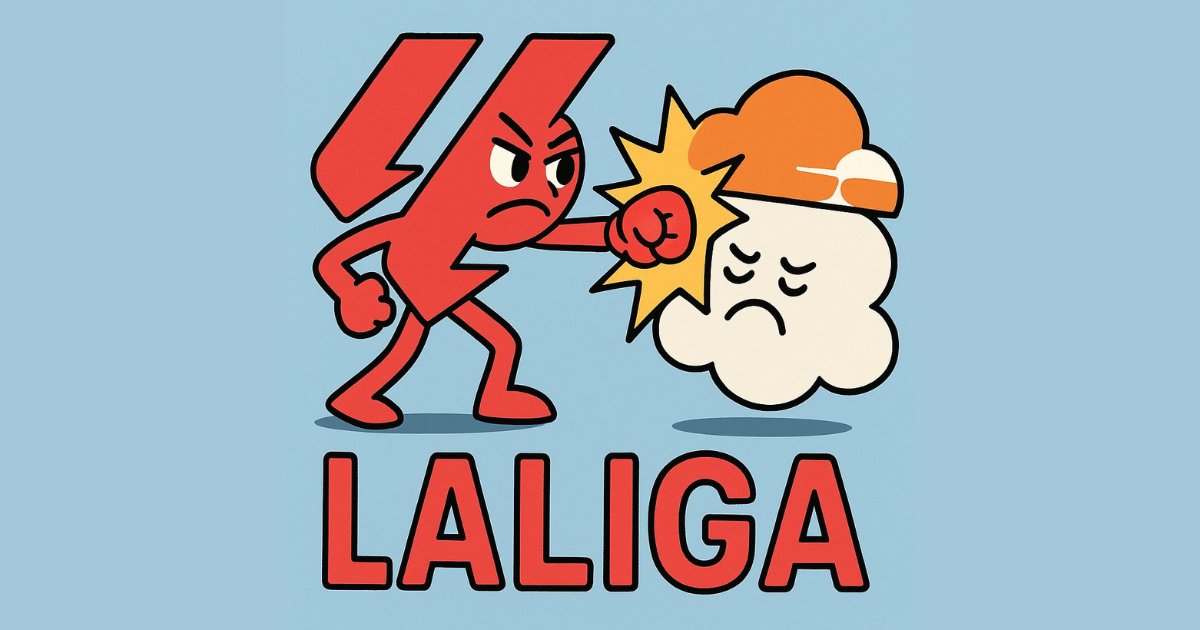
Nine risks caused by AI notetakers
Some useful thoughts from Rachel Coldicutt.
"Using AI notetakers to transcribe all, or the majority of, your meetings will create many new organisational risks relating to workplace culture, information quality, and data management.
Putting clear guidelines in place around how and when AI notetakers can and cannot be used will help mitigate this. For many teams and organisations, having fewer, better meetings will be more effective than transcribing every single one. "
And on this specific subject, there was news this week that "Otter, an AI scribe, shared patient information with an individual that no longer worked at a hospital in Canada."
 Rachel Coldicutt
 Robin Carpenter
Imagination, resilience and letting go
Last week I had a chat with Rachael Davies for the National Digital Forum's AGM (NDF is "a network of people working together to enhance digital interaction with culture and heritage in Aotearoa New Zealand").
You can watch the recording of our chat back, and I've also written up my thoughts.
"The future won't reward certainty. But it won't reward curiosity alone either. It will reward sectors that had the courage to build the structures in which curiosity could lead to capacity, where imagination could help define infrastructure, where individual insight could accrue and compound into collective transformation.
The question for all of us is are we building those conditions, or are we just asking people to imagine harder?"
 Ash Mann
Last week's best things
The three most popular links in last week's edition:
- Reasserting an iconic cultural institution for the modern era - on the Royal Albert Hall's rebrand
- You Can’t Future-Proof by Playing It Safe: Lessons from the Philadelphia Art Museum Rebrand (y'all really like rebrands)
- Manifesto's new report "Curating Connection: Transforming visitor engagement in the cultural sector"
This week's consumption
I finished The Rose Field by Phillip Pullman which, for two thirds of the book, was great, and then for the last third it really really really wasn't.
I've started reading Babel by R F Kuang, which is pretty good so far.
We watched a couple of films last weekend, Troll on Netflix was extremely silly (I enjoyed all the Jurassic Park references), and Wicked Little Letters had a lot of swearing in it (and quite a fun performance from Olivia Colman).
Efterklang have released their The Makedonium Band documentary on Vimeo on demand, we went to the premiere in Copenhagen last year which was joyous.
"The Danish trio Efterklang heads to North Macedonia with a bold dream: to form a band with strangers and, in just one week, create something truly extraordinary.
What begins as a spontaneous idea soon turns into an audacious musical experiment. Without a proper plan but high on curiosity, Efterklang sets out to find local musicians they’ve never met and, together, stage a concert in front of the breathtaking Makedonium monument"
Also this week I discovered that Slovak has lots of very specific words for different types of frost, inoväť is the frost that forms on the branches of trees, srieň is the frost that forms on blades of grass, and námraza is the frost that forms on pavements (and frost 'more generally'). You're welcome.
See you next week
Thanks for reading all the way to the end, please enjoy Pointer Pointer which is a website that generates images of people pointing at wherever your cursor happens to be on the screen.
To finish, a quick reminder that I'm a consultant who helps cultural organisations do better digital work.
Here are some workshops I offer.
I'm also currently working with organisations on things involving:
- user research to inform digital investment priorities,
- technical strategy,
- leadership development,
- 'critical friend' advice,
- project governance,
- mentoring,
- digital strategy,
- and digital readiness.
If it sounds like I could be useful, then let's chat.