This week's best things #84
A mix of indie web oddities, creative projects, research on leadership, tools to dodge AI slop, and how AI safety features can be circumvented with poetry. Also some reflections on audio design, leadership dynamics, a design system from the Swedish state railway, and a recipe for clotted cream

I'm either in Hamburg or Copenhagen as you read this, I hope it's not raining (it's probably raining).
If you were at the Museum Computer Group's Conference on Friday 5th December then I hope you enjoyed my session on digital failure.
I'm trying a new thing, I've recorded a short audio summary of the piece I published this week on lost insights and institutional myths - curious to hear if it's a better (or useful alternative) way for people to access things.

Ok, here are some good things.
The indie web is here to make the internet weird again
"The indie web is about reclaiming space on the internet for human-created content. It’s not about creating the best website, the most optimized one, or the most popular one. It’s about creating whatever you want without caring what an algorithm thinks of it or worrying about an AI ripping it off.
As a result, design on the indie web is a beautiful headache. Unsurprisingly, many sites draw clear inspiration from ’90s web design, with a plethora of pixelated gifs, wacky backgrounds, and animated layouts that are at times motion sickness-inducing (in the best way). Some are even shrines to older eras of the internet, like one of my personal favorites, Frutiger Aero Archive, which is an ode to the design language of the early 2000s. On the whole, the indie web could not be more different from the cold, efficient minimalism of modern web design."
 Stevie Bonifield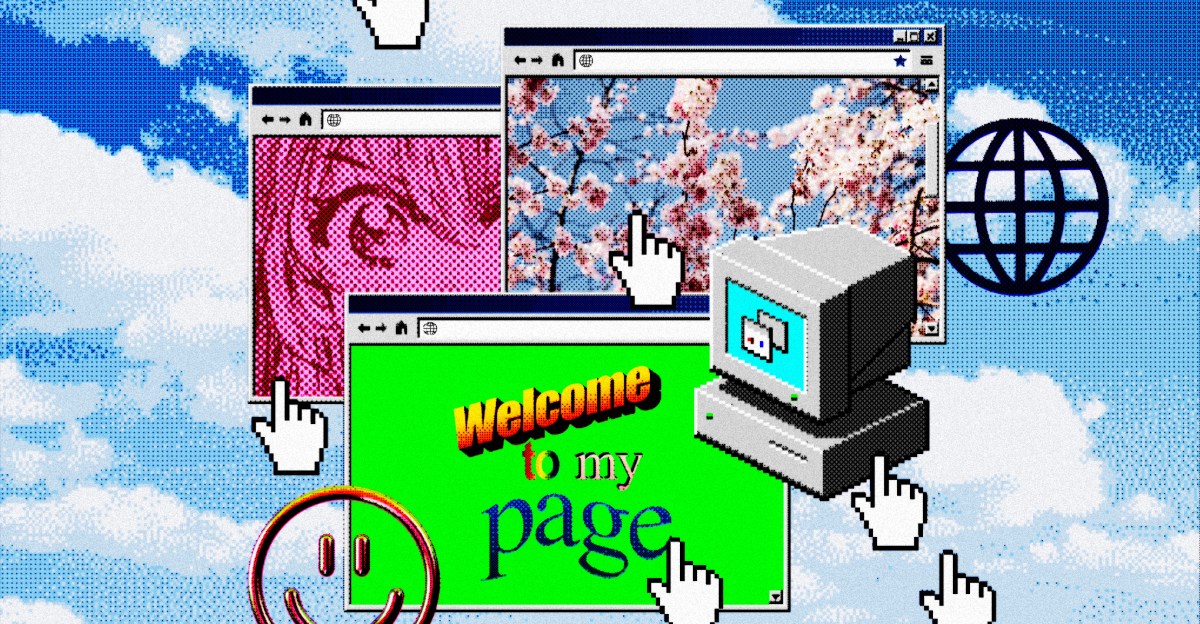
Spite House zine
In the spirit of the indie web, Lauren Pope has spent the last few months putting together a zine which she is publishing digital and physical versions of next month.
"I’ve channelled all my angst (and a lot of spare time, thanks to a slow Q4) into writing a zine about this. It's called Spite House: AI, disintermediation and the end of the free web.
It explores what's happening to content discovery, Tim Berners-Lee's vision for the free web, intellectual property, and whether AI dominance is actually inevitable or just marketed that way. It’s specifically focused on what this means for content folk.
I'm publishing it online for next month, but I’m also selling print copies. Any profit I make will go towards covering some of the next year's costs for writing articles, sending emails, and providing cheap/free equity toolkits."
Buy a copy, and hats off to Lauren for doing something creative with her energy.
 Lauren Pope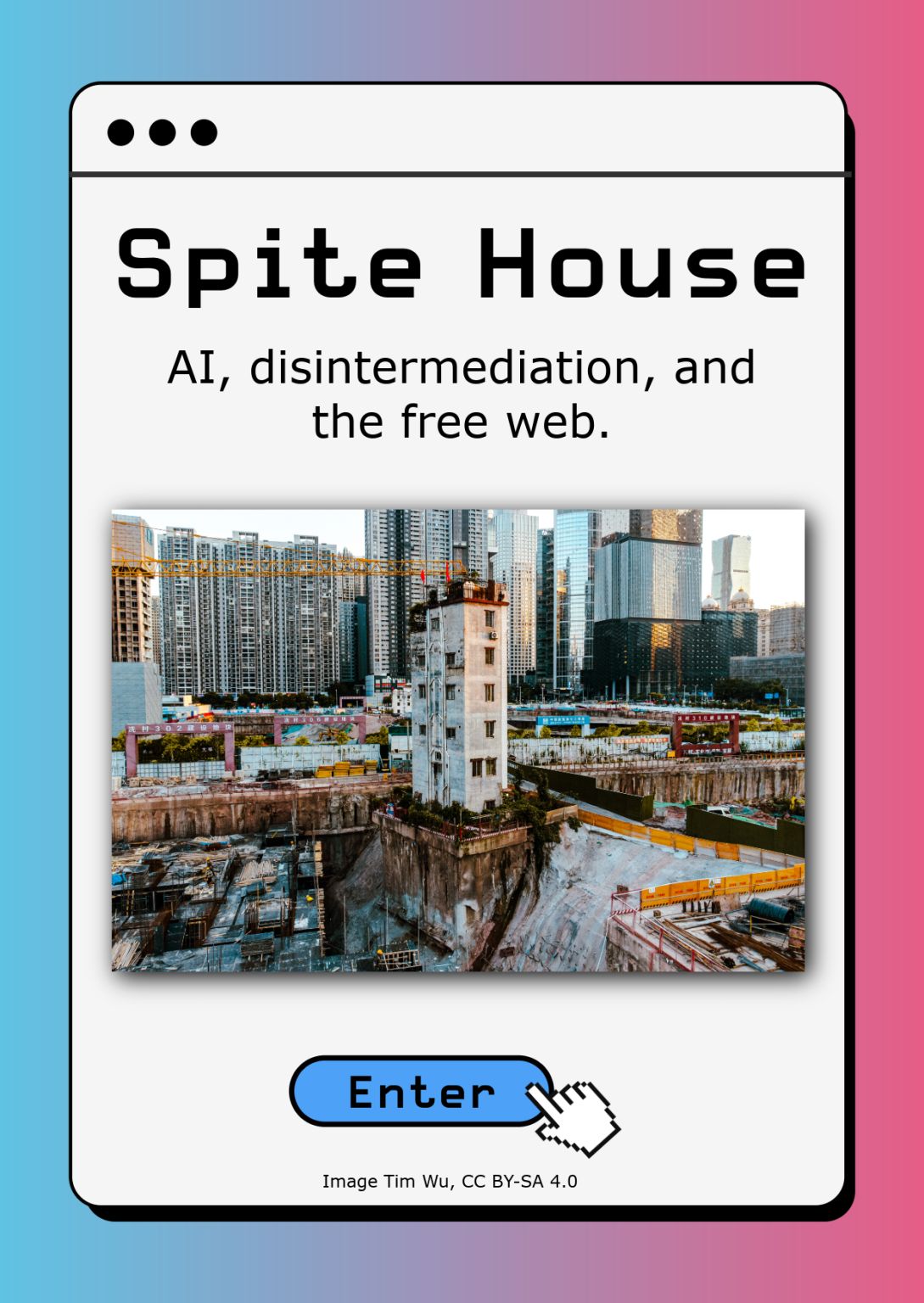
How Childhood Socioeconomic Status Shapes Psychological Safety and Career Risk-Taking at Work
This feels like a really important piece of research (spotted via Trevor Horsewood, whose reflections are well worth a read).
"Our sense was that people who experienced more financially precarious childhoods may be more likely to feel an innate risk aversion, partly due to learned behaviour, and partly as a result of having less of a financial safety net if it went wrong. We decided to carry out a survey to explore whether data would support this hypothesis. Our research question was “Do early-life socioeconomic conditions shape interpersonal and career-based risk-taking at work, and does that relationship change with age?”"
 Tom Geraghty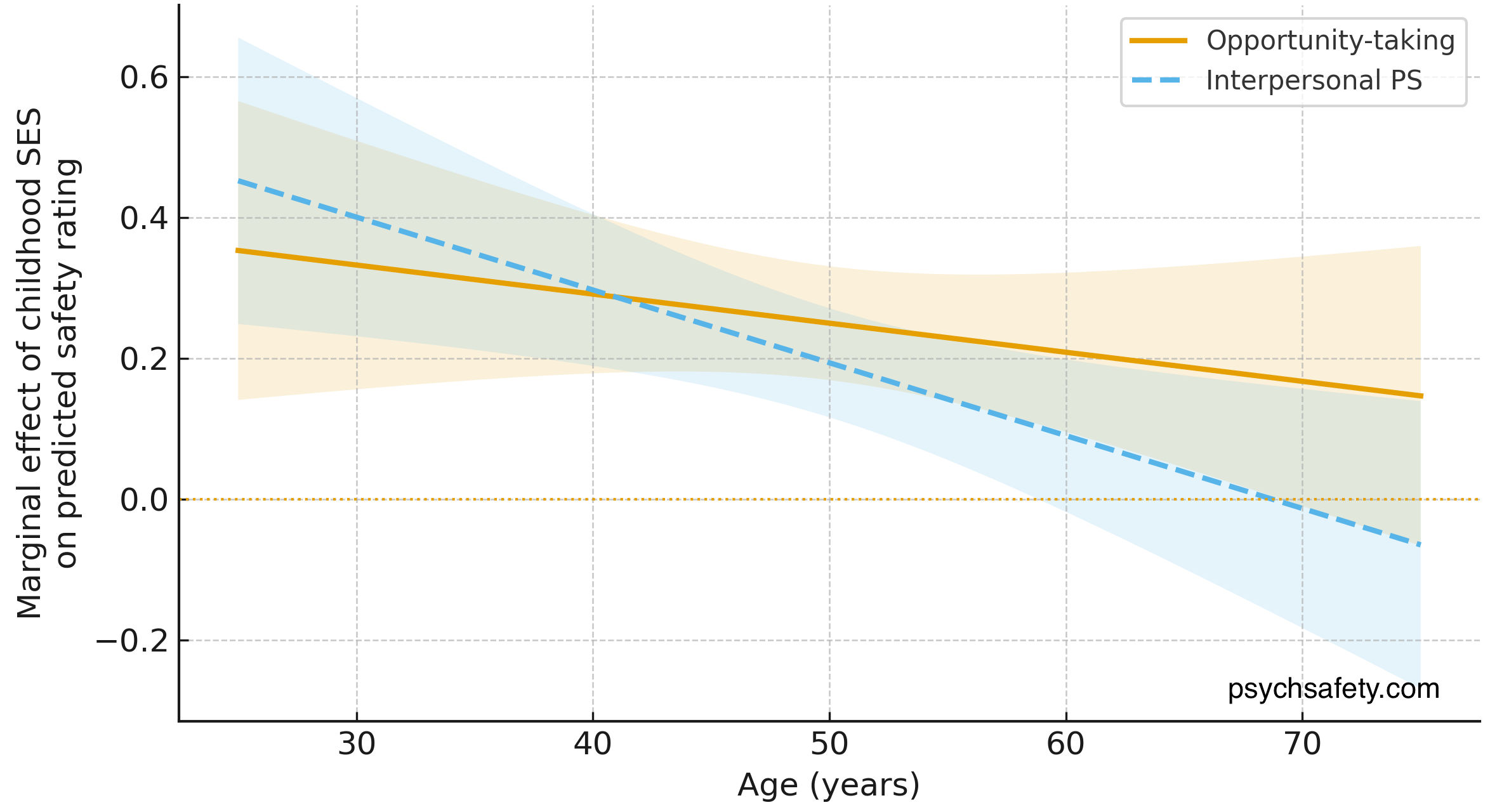
If the Sydney Harbour Bridge wore pants...
Some reflections from a social media manager on a recent viral post (and discussion in the comments).
Slop Evader
Spotted via 404 Media's newsletter.
"It’s hard to believe it’s only been a few years since generative AI tools started flooding the internet with low quality content-slop. Just over a year ago, you’d have to peruse certain corners of Facebook or spend time wading through the cultural cesspool of Elon Musk’s X to find people posting bizarre and repulsive synthetic media. Now, AI slop feels inescapable — whether you’re watching TV, reading the news, or trying to find a new apartment.
That is, unless you’re using Slop Evader, a new browser tool that filters your web searches to only include results from before November 30, 2022 — the day that ChatGPT was released to the public."
 Janus Rose
A collaborative research pilot
If you’ve ever wondered why digital decisions feel messy or slow in your organisation, you’re absolutely not alone. I hear the same thing increasingly often - something routine happens, a decision gets made, and later no one can quite explain why it took so much effort (or, often, remember the exact decision that was made) .
This research pilot will help you spot those moments and start to see the underlying patterns. Next Spring I’m running a 12-week programme for a small cohort of cultural organisations.
Two people from your team will spend a few minutes each week noticing how digital work actually unfolds, then compare patterns with peers facing similar pressures.
It’s designed to fit around your busy schedules, with short, guided reflections that'll give you practical clarity without significantly adding to your workload. The aim here is to help organisations understand their digital culture in practical terms, so that they can make clearer, better, more-informed decisions.
Expressions of interest are open until 23 January. If you want to talk it through then drop me a line - [email protected]
 Ash Mann
AI’s safety features can be circumvented with poetry, research finds
The power of poetry...
"Poetry can be linguistically and structurally unpredictable – and that’s part of its joy. But one man’s joy, it turns out, can be a nightmare for AI models.
Those are the recent findings of researchers out of Italy’s Icaro Lab, an initiative from a small ethical AI company called DexAI. In an experiment designed to test the efficacy of guardrails put on artificial intelligence models, the researchers wrote 20 poems in Italian and English that all ended with an explicit request to produce harmful content such as hate speech or self-harm.
They found that the poetry’s lack of predictability was enough to get the AI models to respond to harmful requests they had been trained to avoid – a process know as “jailbreaking”."
 Johana Bhuiyan
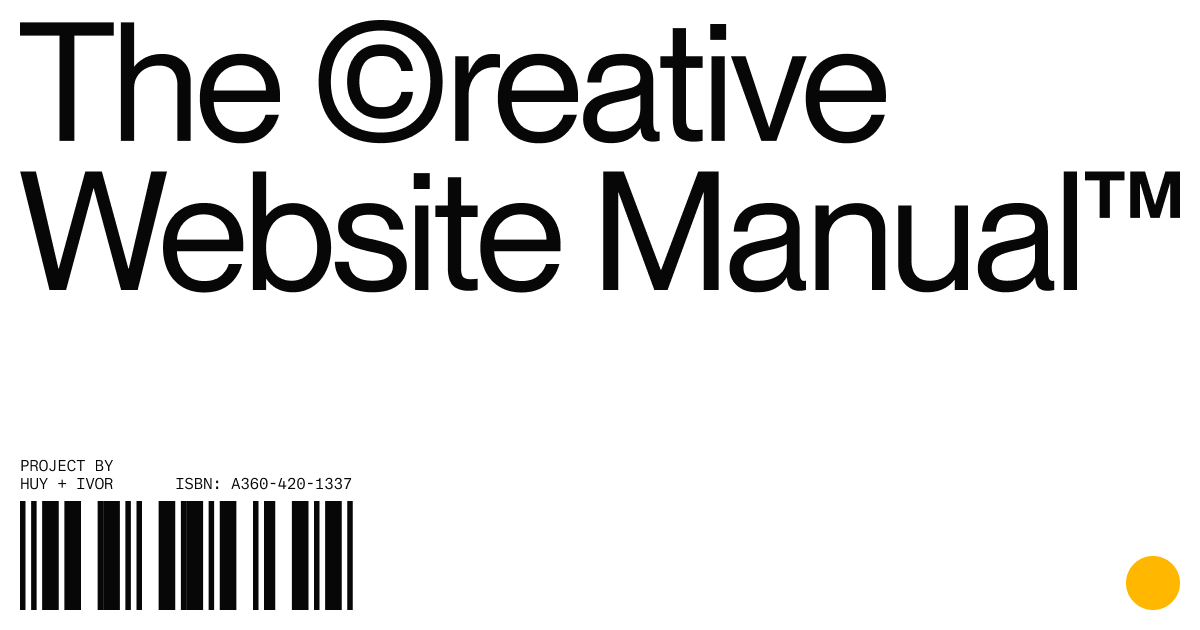
The Creative Web Manual
A website/guide to creating 'websites that push the boundaries', looking at layouts, typography, colour, and motion.
It's quite interesting and possibly useful in parts, in other parts it looks quite a lot like a website that I might share in my 'and finally' section at the end of the newsletter...

Leadership doesn’t arise from a personality score; it emerges from a real-time relationship with a living system
Lots to enjoy/think about in this post from Corina Enache.
"I remember talking to my husband, a neuroscientist, about this. People who rise into power in Western institutions often show stronger narcissistic tendencies, not because they are “bad people,” but because the system itself rewards the loud, the certain, the self-inflating. Institutions often select for the personality that can climb, not necessarily the one that can hold.
This creates a contradiction. On paper, corporations ask leaders to “guide the system.” In practice, they expect them to control people. The more hierarchical the structure, the more this expectation hardens. Yet leadership requires almost the opposite: the ability to soften the ego rather than amplify it, to tune into others, to carry a wider field, to negotiate rather than impose, to admit uncertainty instead of faking omniscience. The very qualities that help someone rise are often the ones they must unlearn to actually lead."
It reminded me of a few of the things that Tash Willcocks and I talked about on the podcast earlier this year.
I also saw this article which looks at some recent research carried out at Harvard "We found that people with the greatest preference for being in charge are, on average, worse than randomly assigned managers. It’s hard to know exactly why because there are a lot of factors in play, but we show evidence in the paper that they are overconfident in their own capabilities, and they think they understand other people better than they do. We all know people like that.
This was a surprising finding. And it’s important, because interest in leadership plays a big role in how companies pick managers. Companies have their own hiring and employee evaluation policies of course — they don’t pick managers randomly like we did — but it’s surely true that preference for leadership plays a big part in who gets promoted to management. For example, we find that men are much more likely to prefer being in charge, but they aren’t any more effective than women in the role of manager."
 Liz Mineo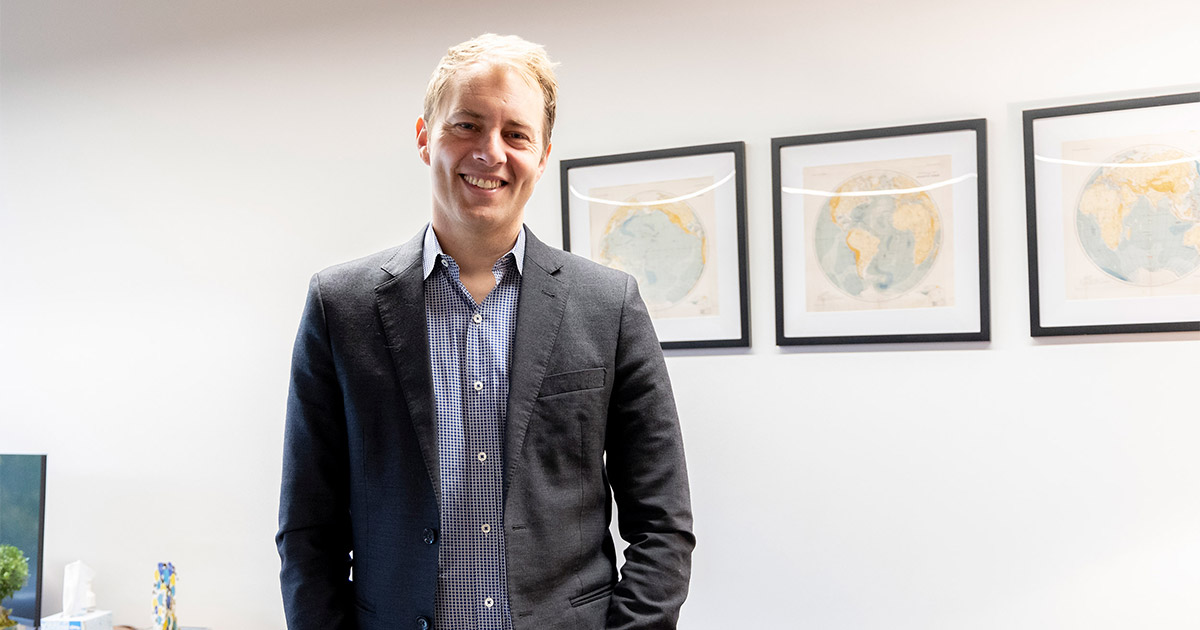
How the Brussels Sewer Museum leveraged audio guide gamification for high visitor engagement
I've recently shared some bits and pieces about audio experiences, here's a look at the audio guide at the Brussels Sewer Museum.
"At the Sewer Museum, we were immediately taken in by Michel, a fictional guide, a sewer worker who plunged us into our "first day on the job" underground. The device is simple, a box to click on three-digit numbers, and the experience is anything but classic, notably due to the possibility of choosing our own path and reactions. This approach of gamification and unique storytelling transformed a simple visit into an immersive experience. But is this impression shared by other visitors? "
 Danna Mulya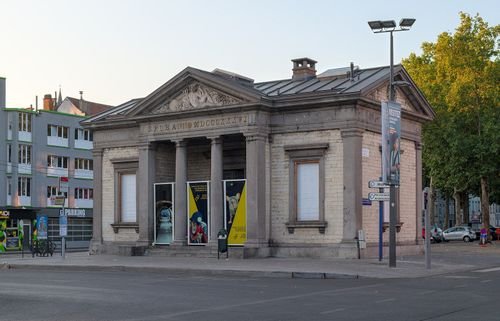
The First Team Concept: A Guide for Executives
Spotted via Neil's (excellent) November update, was this piece looking at the idea of the 'first team'.
"A First Team – articulated by Patrick Lencioni – is the idea that true leaders prioritize supporting their fellow leaders over their direct reports. Patrick recommends they are responsible to their peers more than they are to their individual or “Second” teams."
I wrote a bit more about this elsewhere.
 Michael Vizdos
 neillyneil
The Swedish railway's design system
A nicely-presented design system from SJ, the Swedish state railway (Statens Järnvägar).
It's all in Swedish (obvs) but there are a bunch of blogs, principles, components etc shared in a clear, usable way.

Andrew Lloyd website
And finally, on the subject of Neocities and the indie web...I'm not entirely sure who this is from or why it exists and it made my eyes hurt a bit but also I have a soft spot for a) things that look like home-made websites from 1996 and b) things that are silly. This is both of those things.


Last week's best things
The three most popular links from last week's edition:
- Dr Carrie Goucher on Six ways you are over-using your strengths and keeping people in endless frustrating meetings
- 100+ trend reports for 2026 and beyond
- ‘Your new website sucks’: Bureau of Meteorology redesign is lightning rod for heated criticism
This week's consumption
I'm halfway through Babel which is quite engaging although there is a lot of (too much) discussion about etymology and philosophical musings on the nature of translation.
We watched Jingle Bell Heist (which was totally fine although it was distracting how not-at-all like a department store the department store looked) and have also been working our way through The Beatles Anthology on Disney+ which is very good (if you like The Beatles, which I do).
I also watched the latest clutch of Stranger Things episodes whose release made Netflix crash last week, I think I've long stopped caring what happens in this but I feel like I should see it through to the end now.
You can't get clotted cream in Sweden so my wife found this very easy recipe to make (very delicious) clotted cream.
See you next week
Thanks for reading all the way to the end, please enjoy this portfolio website which does some quite upsetting things if you scroll down far enough.
To finish, a quick reminder that I'm a consultant who helps cultural organisations do better digital work.
Here are some workshops I offer.
I'm also currently working with organisations on things involving:
- user research to inform digital investment priorities,
- technical strategy,
- leadership development,
- 'critical friend' advice,
- project governance,
- mentoring,
- digital strategy,
- and digital readiness.
If it sounds like I could be useful, then let's chat.